
The Play That Goes Wrong: High School Edition, A Comprehensive Guide
The Play That Goes Wrong: High School Edition is a comedic masterpiece, readily available as a downloadable PDF through official licensing sources like Playscripts, Inc.
Licensing costs and royalty fees vary, but the PDF provides the complete script and essential production details for a successful theatrical experience.
What is “The Play That Goes Wrong” High School Edition?
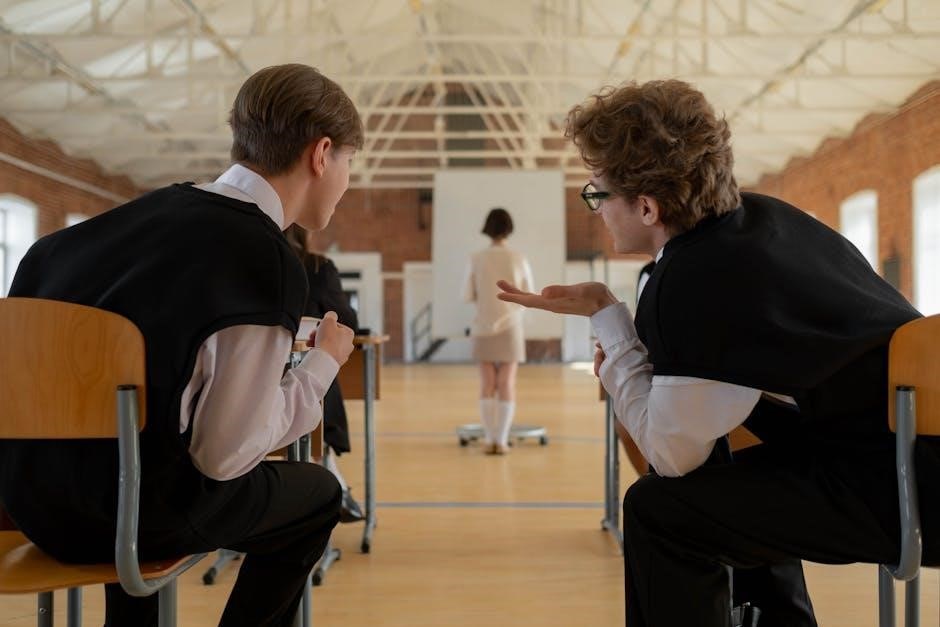
The Play That Goes Wrong: High School Edition is a specially adapted version of the acclaimed comedy, designed to be accessible and enjoyable for student performers and audiences. This hilarious production centers around the Cornley Polytechnic Drama Society’s disastrous attempt to stage a 1920s murder mystery, “The Murder at Haversham Manor.”
Unlike a typical play, the humor isn’t in the story, but how the story is presented – or rather, how spectacularly it falls apart! Expect collapsing sets, malfunctioning props, missed cues, and actors battling against a cascade of comedic mishaps. The High School Edition PDF, obtainable through licensing, contains the full script, character breakdowns, and production notes.
It’s a play about a play going wrong, making it a meta-theatrical experience that’s both clever and incredibly funny. The PDF format allows directors and students easy access to all necessary materials for rehearsal and performance, ensuring a chaotic, yet controlled, theatrical experience.
The Core Concept & Comedy Style
At its heart, “The Play That Goes Wrong” revolves around a meticulously crafted illusion of chaos. The core concept isn’t simply a bad play, but a play where everything that can go wrong, does go wrong, with escalating absurdity. The humor stems from the contrast between the actors’ earnest attempts to perform and the increasingly disastrous reality unfolding onstage.
The comedy style is heavily rooted in physical slapstick, reminiscent of classic farces. Expect pratfalls, mistaken identities, and props behaving unpredictably. The High School Edition PDF provides ample opportunity to explore these comedic techniques, offering a blueprint for controlled chaos.

The script, available via licensing, is cleverly written to facilitate these mishaps, with jokes layered within the unfolding disaster. It’s a play that demands precise timing and commitment from the actors, even as they’re seemingly losing control – a delightful paradox for any theatre group!
Target Audience & Suitability for High Schools
“The Play That Goes Wrong: High School Edition” is specifically tailored for secondary school performers, offering a challenging yet accessible theatrical experience. The humor is broadly appealing, making it enjoyable for audiences of all ages, from students and families to community members. The PDF script maintains the core comedic elements while adjusting content for a younger cast and audience.
Its suitability lies in its emphasis on ensemble work and technical theatre skills. While physically demanding, the slapstick is manageable with proper training and safety precautions. The High School Edition PDF facilitates this, providing guidance for directors and stage managers.
The play’s self-aware humor resonates with high school students, and the opportunity to embrace controlled chaos is incredibly liberating. It’s a fantastic vehicle for developing performance skills and fostering a collaborative spirit within the drama department.

Understanding the Different Editions & Revisions
The Play That Goes Wrong has evolved through revisions, including a High School Edition PDF, with localized script adjustments and additions like the “Hamilton” joke.
Original West End Production vs. Broadway Adaptation
While the Play That Goes Wrong originated in the West End, the Broadway adaptation saw several subtle, yet important, revisions. These weren’t necessarily reflected immediately in all published versions, including early iterations of the High School Edition PDF.
The core comedic structure remained consistent, but adjustments were made to props and dialogue to resonate more with American audiences. For example, “white spirit” was changed to “paint thinner” – a localization reflecting common household products. These changes aimed for clarity and relatability without altering the fundamental humor.
It’s important to note that obtaining the most current High School Edition PDF from Playscripts, Inc. generally ensures access to these updated elements. Earlier versions might lack these localized details, potentially impacting the audience’s understanding of certain jokes. The Broadway version also incorporated the now-famous “Hamilton” reference, which subsequently found its way into licensed scripts.
Key Changes & Localizations (US vs. UK Script)
The transition from the original UK script to the US adaptation of The Play That Goes Wrong involved specific localizations, impacting the High School Edition PDF as well. These weren’t drastic overhauls, but rather refinements to ensure comedic timing and audience comprehension.
Beyond the well-known substitution of “white spirit” for “paint thinner,” other minor adjustments were made to props and references. These changes aimed to align the humor with American cultural touchstones, enhancing the relatability for US audiences. Obtaining the latest PDF version from Playscripts, Inc. is crucial to access these updated details.
Directors should be aware that older PDFs might contain the original UK terminology. While not detrimental, these elements could slightly diminish the comedic impact. The localization process demonstrates a commitment to making the play universally funny, regardless of geographical origin.
The “Hamilton” Joke & Script Updates (2022+)
Recent updates to The Play That Goes Wrong, particularly those implemented around 2022 and reflected in the High School Edition PDF, include a topical joke referencing the musical Hamilton. This addition, delivered during Chris’s monologue, playfully acknowledges a fictional box office mishap, offering a humorous apology to affected patrons.
While its exclusivity to the American script remains debated, the Hamilton joke is confirmed to be present in the currently licensed PDF version available through Playscripts, Inc. This demonstrates ongoing script evolution, keeping the play relevant and engaging for contemporary audiences.
Directors utilizing the PDF should verify inclusion of this update. Accessing the most current version ensures the production benefits from the latest comedic refinements and avoids outdated material. These script tweaks highlight the play’s dynamic nature and continued appeal.
One-Act Origins & Expansion to Full-Length Play
The Play That Goes Wrong didn’t begin as the two-hour spectacle audiences enjoy today. Its origins lie in a significantly shorter, one-act format, initially conceived as a compact comedic showcase. The success of this initial version spurred its expansion into the full-length play now widely performed, including the High School Edition available as a PDF.
While details regarding the precise changes between iterations aren’t fully documented within the PDF itself, the expansion involved substantial additions to plotlines, character development, and, crucially, the escalating series of mishaps.
Directors utilizing the High School Edition PDF should understand this evolution. The current script builds upon the core comedic premise of the one-act, offering a richer, more complex, and hilariously chaotic theatrical experience for both performers and viewers.

Obtaining the “High School Edition” PDF
The official source for the Play That Goes Wrong: High School Edition PDF is Playscripts, Inc., offering a licensed version for production purposes.
Official Licensing Sources (Playscripts, Inc.)
Playscripts, Inc. stands as the primary and officially sanctioned source for acquiring the performance rights and the Play That Goes Wrong: High School Edition PDF.
They handle all licensing arrangements, ensuring compliance with copyright regulations for schools and community theatre groups. Obtaining the script directly from Playscripts guarantees you have an authorized and up-to-date version, including any revisions or updates implemented since the initial release.
The website provides a straightforward process for requesting a perusal copy to review the script before committing to a full license. Licensing isn’t a simple purchase; it’s a rental agreement granting permission to perform the play within specific parameters, such as dates and venue size. Playscripts offers various licensing options tailored to different production needs, and their customer support team is available to assist with any questions regarding the process.
Using Playscripts ensures that the creators and rights holders are appropriately compensated for their work, supporting the continued development of new theatrical productions.
Cost of Licensing & Royalties
The cost of licensing The Play That Goes Wrong: High School Edition, and associated royalties, are determined by several factors, primarily the size of the performing venue and the number of performances planned.
Playscripts, Inc. offers tiered pricing structures to accommodate various school budgets and production scales. Generally, expect licensing fees to range from several hundred to over a thousand dollars, depending on these variables. Royalties are then calculated per performance, representing a percentage of ticket sales.
Schools should budget not only for the initial licensing fee but also for ongoing royalty payments. It’s crucial to accurately estimate attendance to project royalty costs effectively. Playscripts provides detailed royalty calculation guidelines on their website.
Additional costs may include perusal fees for reviewing the script and potential costs for script copies for the cast and crew. Early budgeting and careful consideration of performance schedules are essential for managing these expenses.
PDF Format & Content Overview
The Play That Goes Wrong: High School Edition PDF, obtained through Playscripts, Inc., is a digitally formatted document designed for easy access and distribution to the production team.
The PDF contains the complete performance script, including stage directions, character dialogue, and technical cues. It also typically includes a preface with notes from the authors regarding the play’s intent and performance style.
Furthermore, the PDF often features character breakdowns, a comprehensive prop list, and suggestions for set design – all tailored for a high school production environment.
The document is generally secured to prevent unauthorized copying or editing, ensuring the integrity of the licensed material. It’s a comprehensive resource, providing everything needed to begin the rehearsal process, from script analysis to technical planning.

Technical Requirements & Production Elements
The PDF details complex set construction, crucial prop functionality (and deliberate malfunction!), and precise sound/lighting cues to amplify the comedic chaos onstage.
Set Design & Construction Challenges
The PDF for The Play That Goes Wrong: High School Edition explicitly outlines a deceptively complex set, designed to actively fail throughout the performance. This presents significant construction challenges for high school production teams.
The set isn’t merely a backdrop; it’s a character in itself, requiring meticulous planning for collapsing walls, malfunctioning doors, and precarious furniture. Detailed diagrams within the PDF are essential, but builders must anticipate the stresses of repeated “accidents.”
Safety is paramount. Construction must prioritize secure, yet deliberately weak, points of failure. The PDF doesn’t shy away from acknowledging the inherent risks and stresses the need for robust safety checks. Expect to spend considerable time reinforcing structures while simultaneously engineering their eventual collapse. Budgeting for materials and labor will be crucial, as this set is far more demanding than a typical high school production.
Prop List & Importance of Functionality (and Malfunction!)
The Play That Goes Wrong: High School Edition PDF details an extensive prop list, where functionality – and, crucially, malfunction – is key. Props aren’t simply held; they are integral to the escalating chaos.
Expect everything from a seemingly innocuous revolver to a collapsing bookcase, all requiring careful construction and rigging for believable failures. The PDF emphasizes that props must appear normal initially, then spectacularly fall apart.
White spirit (or paint thinner, depending on the script version detailed in the PDF) is a recurring element, demanding safe handling and realistic spillage effects. Detailed notes within the PDF highlight which props must fail, and when. Rehearsals must incorporate prop manipulation to ensure comedic timing and safety. Budgeting for duplicates is wise, as frequent “breakage” is guaranteed!
Sound & Lighting Cues – Creating the Chaos
The Play That Goes Wrong: High School Edition PDF underscores that sound and lighting aren’t merely supportive; they are the chaos. The script relies heavily on precisely timed cues to amplify the comedic mishaps.
Expect cues for collapsing floors, falling objects, and malfunctioning doors, all demanding meticulous execution. The PDF details specific sound effects – creaks, crashes, and splatters – essential for selling the illusion of disaster. Lighting cues must emphasize the actors’ struggles and highlight prop failures.
Incorrectly timed cues become part of the joke, but require intentionality. The PDF likely includes a comprehensive cue sheet. Rehearsals should prioritize technical integration, ensuring the stage crew understands their vital role in creating the show’s signature pandemonium. A dedicated sound and lighting operator is crucial!
Character Breakdown & Performance Notes
The Play That Goes Wrong: High School Edition PDF details the Cornley Polytechnic Drama Society’s eccentric personalities, emphasizing physical comedy and precise timing for maximum comedic effect.
The Cornley Polytechnic Drama Society – Key Personalities
The Play That Goes Wrong PDF meticulously outlines the delightfully disastrous members of the Cornley Polytechnic Drama Society. Chris Bean, the enthusiastic but hapless director, is central to the chaos, often attempting to salvage the production while simultaneously contributing to its downfall.
Trevor Tian, prone to fainting, and Jonathan Harris, desperately trying to remember his lines, provide consistent comedic fodder. Annie Twillingham, overly committed and frequently misinterpreting directions, adds another layer of absurdity. Maxwell Bell, the sound and lighting operator, is hilariously incompetent, exacerbating the onstage mishaps.
The PDF emphasizes that each character’s quirks and dedication – despite their lack of talent – are crucial to the play’s humor. Understanding their motivations, even within the mayhem, is key for performers to deliver authentic and hilarious portrayals. The script details each personality’s specific failings, offering ample opportunity for physical comedy and character-driven laughs.
Physical Comedy & Slapstick Techniques
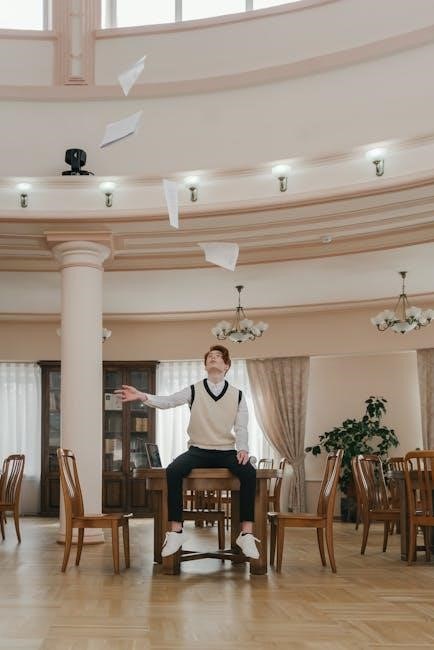
The Play That Goes Wrong PDF is a goldmine of stagecraft, heavily reliant on precise physical comedy and expertly timed slapstick. The script details specific falls, trips, and prop malfunctions, demanding rigorous rehearsal to ensure safety and comedic impact.
Successful execution requires performers to master reactions – exaggerated expressions of surprise, pain, or frustration – that amplify the humor. The PDF emphasizes the importance of commitment; half-hearted attempts diminish the effect. Blocking is meticulously planned to maximize comedic timing and create a cascading effect of errors.
Understanding the mechanics of each gag, from collapsing sets to malfunctioning doors, is vital. The document stresses that while the play looks chaotic, it’s actually highly choreographed. Safety briefings and careful spotting are paramount, ensuring performers can execute the physical demands without injury.
Memorizing Lines Amidst the Mayhem
The Play That Goes Wrong PDF presents a unique memorization challenge. While the dialogue is crucial, it’s often overshadowed by the constant physical comedy and chaotic stage business. Actors must internalize their lines and their blocking, reactions, and prop interactions simultaneously.
Traditional line-learning techniques are helpful, but the PDF suggests incorporating physical rehearsal from the start. Running lines while simultaneously performing the comedic actions reinforces both elements. Focus on “cues” – not just verbal lines, but also physical triggers that prompt the next line or action.
The script’s interruptions and overlapping dialogue demand exceptional listening skills. Actors must be prepared to deliver lines even while reacting to onstage mishaps. The PDF recommends recording rehearsals to identify areas where line delivery falters amidst the chaos, allowing for targeted practice.
Resources for Directors & Stage Managers
The Play That Goes Wrong PDF, alongside production guides and websites, offers invaluable support for directors and stage managers navigating this hilarious, complex show.
Production Guides & Helpful Websites
Successfully staging “The Play That Goes Wrong” demands meticulous planning, and fortunately, several resources exist to aid directors and stage managers. Playscripts, Inc., the official licensing source for the High School Edition PDF, often provides supplementary materials alongside the script itself. These can include director’s notes, character breakdowns, and even sample rehearsal schedules.
Beyond Playscripts, online forums dedicated to theatrical production frequently host discussions specifically about this play. These forums are goldmines for troubleshooting common issues, sharing prop-building tips, and discovering innovative solutions to the show’s inherent challenges. Websites specializing in stagecraft and technical theatre can also offer guidance on set construction, lighting design, and sound cue implementation – all crucial elements for maximizing the comedic chaos.
Remember to explore resources focused on physical comedy and slapstick techniques, as these are central to the play’s humor. Examining videos of professional productions can provide valuable insights into timing and execution. Utilizing these guides and websites will significantly enhance your production’s quality and ensure a truly unforgettable performance.
Troubleshooting Common Problems During Rehearsal
Rehearsing “The Play That Goes Wrong” is inherently chaotic, and anticipating problems is key. A frequent issue is timing – the meticulously planned malfunctions require precise coordination. Encourage actors to embrace improvisation within the framework of the script, as unexpected moments will occur. Prop failures are inevitable; have backups readily available and practice quick recovery techniques.
Physical comedy often presents challenges. Ensure actors understand safety protocols and practice falls and movements under supervision. Blocking can be tricky, given the constantly shifting set pieces. Regularly review sightlines and adjust positions accordingly. Line memorization can suffer amidst the mayhem; utilize repetition and cue cards during early rehearsals.
Don’t be afraid to pause and address issues directly. The High School Edition PDF doesn’t eliminate the inherent difficulty, but a proactive approach to troubleshooting will transform potential disasters into comedic gold.
Safety Considerations for Physical Comedy
“The Play That Goes Wrong” relies heavily on physical comedy, demanding strict adherence to safety protocols. Prioritize actor well-being above comedic effect. Thoroughly pad all fall zones and ensure the stage floor is clear of obstructions. Practice all stunts and falls with a qualified supervisor present, emphasizing proper technique.
The High School Edition PDF doesn’t diminish the inherent risks; in fact, inexperienced performers require extra caution. Regularly inspect props for structural integrity, particularly those involved in malfunctions. Establish clear communication signals between actors and stage management for immediate assistance if needed.
Warm-up exercises focusing on flexibility and body awareness are crucial. Emphasize controlled movements and discourage improvisation that could compromise safety. A detailed safety briefing before each rehearsal and performance is non-negotiable.